川内理香子展「Colours in summer」会場風景、蔦屋書店 GINZA ATRIUM、東京、2022年
All Photos by Shintaro Yamanaka (Qsyum!) ©︎Rikako Kawauchi, courtesy of the artist and WAITINGROOM
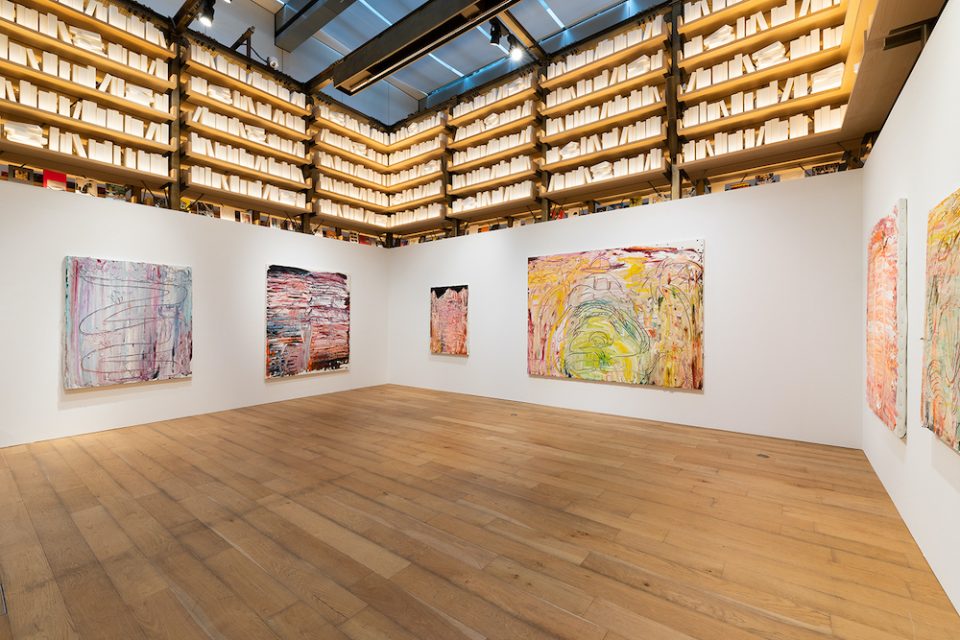
All Photos by Shintaro Yamanaka (Qsyum!) ©︎Rikako Kawauchi, courtesy of the artist and WAITINGROOM
It may be that, right from the beginning, I will go on and on about things that seem entirely unrelated. That’s because I turned sixty this summer. You might ask what connection there could possibly be between reaching sixty and rambling on about seemingly irrelevant matters, but to put it plainly, I’ve decided to clarify for myself what I mean by art criticism—criticism as a practice. After all, they say that turning sixty marks the completion of a full cycle of years and a return to the starting point.
So this brings me to the matter of criticism. In fact, I have already written once—elsewhere—about the subtle shift in my feelings upon turning sixty. But that piece won’t be published for some time, and its intended readership does not overlap at all with those interested in art, so I doubt that anyone reading this will ever come across it. In that essay, I discussed the difference between thinking and writing, and between writing and speaking, and that issue arises here as well, at least to some extent. Even so, that earlier piece was not art criticism but a much freer kind of essay, which means that this is the first time since turning sixty that I am writing a substantial text specifically as art criticism.
After I had been called a critic— and had begun to refer to myself that way as well— I eventually found myself giving university lectures on matters related to art. What struck me most forcibly then, and what I still have not been able to shake off, is the terminology of “research” and “investigation.” Of course, for a university faculty member, education and research are the two main pillars of the job, so I have no intention of challenging that. But when I thought, in those early days when I had only just begun writing criticism, about whether what I was doing could truly be considered research or investigation, I couldn’t help feeling that in some essential way it was altogether different. As I wrote at the beginning, that sense of incongruity stayed with me for decades, right up until I turned sixty, at which point I felt I might finally try to settle the matter for myself. (For similar reasons, I have a strong aversion to the word “archive,” which has become so popular in recent years.)
As for what distinguishes such activities—research, investigation, or even archiving—from criticism, from the practice of critique: put simply, the former demands objectivity, whereas the latter is by its nature deeply subjective. I have long noted that in Japan, criticism has been passed down as a branch of literature, a genre grounded in the private voice. For this reason, I actually draft this text vertically, from right to left, as one would on manuscript paper. What you are reading now is the result of converting that format into the standard horizontal, top-to-bottom layout used on the web. Why go to such trouble? Because the conventions of literary magazines follow the former format. By contrast, the latter is what one normally uses for academic papers—yet when I adopt that format, I simply cannot think and write privately, in the way my work requires. At least not in my case.
Lately, my reading has turned increasingly toward so-called classics. The reason for this is not some predictable idea that works which have endured over centuries must contain something universal. Quite the opposite: what has begun to interest me anew is how the writing of these works—whether in literature or in philosophy—differs drastically from what we now call “literature” or “philosophy.” To return to the matter of research and investigation, the feeling I have while reading the classics is utterly unlike anything associated with academic papers, which present the results of research or inquiry. This is true not only in obvious cases such as Nietzsche or Wittgenstein, but even of supposedly systematic thinkers like Hegel or Heidegger; the classics are in fact highly subjective, much closer to criticism or essay than to the rigid format of contemporary scholarship. The prime example, of course, is Plato, whom we can consider the progenitor of philosophy.
I recently picked up Plato’s Phaedrus again. As you know, Plato’s philosophical writing consists of Socrates and someone else (in this case, Phaedrus) engaging in an extended, almost casual conversation—more like a scene from a play—utterly unlike what we today think of as philosophy. Yet Plato unquestionably believed this to be philosophy in its truest form. And I felt that this had a great deal to do with the kind of criticism or critique that I have in mind. So from here, I would like to move into the main subject, taking that connection as my starting point.
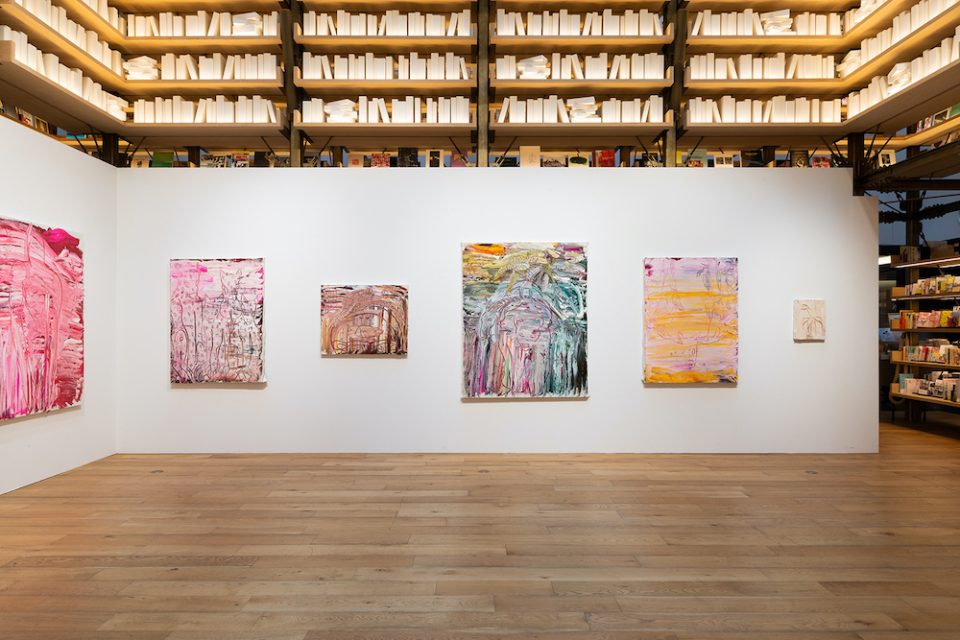
This too happened during the summer: I went to see Rikako Kawauchi’s solo exhibition “Colours in summer” at Tsutaya Books in Ginza. The moment I stepped into the atrium where the works were displayed, a surge of overflowing sensations swept over me. It felt less like looking at paintings than experiencing them bodily, and that sensation immediately rippled through me as a powerful sense of dynamism. The force of that impression seemed to arise not from any single painting, but from being immersed in the aggregated presence of all the works together. Here, then, I would like to consider where that total, bodily experience might originate.
As in this exhibition, Kawauchi’s paintings feature a great many animals. Not that their forms are clearly rendered; rather, they appear as thin, deeply incised grooves—like swift cuts—traced in outline across thick layers of paint. Parrots, parakeets, condors, jaguars, coyotes, sloths, anteaters, foxes, crocodiles, fish, frogs, shells, snakes—just to name whatever comes to mind—one can discern an astonishing number of “animals” within the paintings. And when I see animals, the first thing that springs back to mind is their speed. At home we have a parakeet, a parrot, and a dog, and their quickness and freedom of movement are beyond comparison with humans—utterly impossible to pursue. At best, one can follow them with the eyes. They manage because they adjust themselves to us, but watching their agility makes me realize just how slow humans truly are. And snakes—how is it that something with neither arms nor legs can move with such wave-like smoothness and speed? There may be various explanations, but what matters is simply that many creatures move in ways entirely different from humans; it is not for us to impose human reasoning on their speed and convince ourselves we understand it.
And yet, despite the long tradition—especially in Japanese painting—of depicting animals, almost none of those works convey their sense of speed. They are shown as though posing patiently for a human model, standing motionless and composed. Which is why they end up looking less like animals than like humans. Or perhaps it is more accurate to say they are depicted as humans. But the difference in speed between animals and humans stems from internal, anatomical structures. Thus, an animal shown standing still is, in effect, depicted as a lifeless body. If one were to portray an animal in a way that reflects that internal difference, we humans could not possibly capture it as a stable image; its outline would scatter, its form collapse in an instant, our eyes unable to keep pace, and it would vanish from sight almost immediately. The very possibility of rendering an animal as a static image means that one is depicting only its surface. There is no inside. To attempt to depict animality including its interior, one must—like a hunter—devise ways to close the distance, to somehow catch up with the animal’s speed. When one does, the animal’s shape begins to transform in various ways. One can only begin by grasping the signs of that transformation.
To me, the animals in Kawauchi’s works feel as though they have been captured through such efforts—depicted not from the exterior, but from within, from the difference of their internal structures and their inherent rapidity of movement, as though seized in the very process of hunting on the canvas.
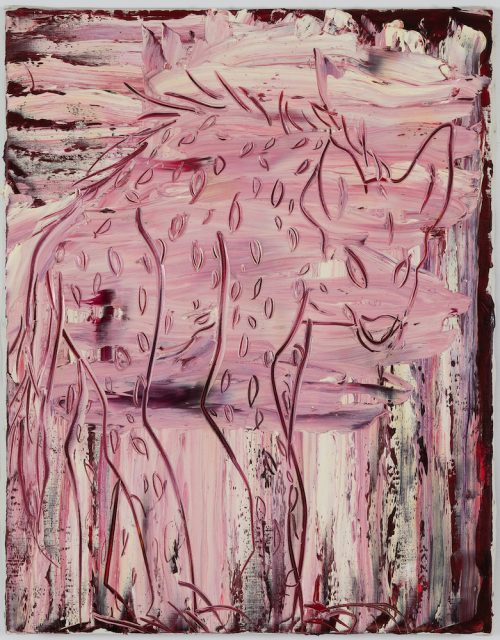
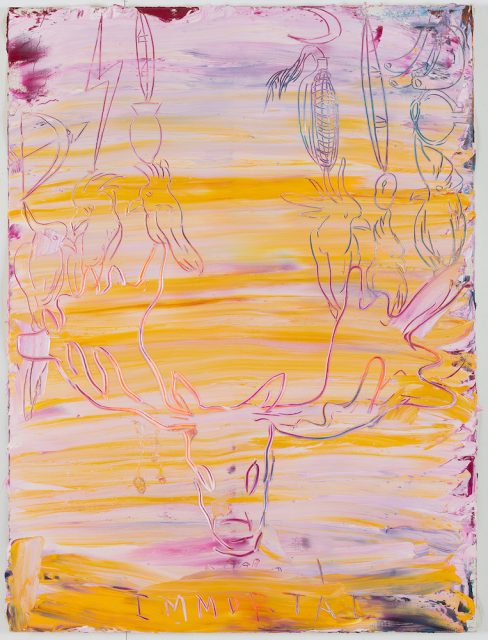
Kawauchi’s method of painting—something she herself often mentions in interviews—is founded on drawing before thinking. It is not a matter of deciding to depict an animal and then calmly rendering it with care and deliberation. She uses her full bodily force, her instantaneous reflexes, to carve traces onto the surface of the canvas with the speed necessary to approach an animal’s presence. In that process, the animal on the canvas flees, advances, transforms, and perhaps even summons other animals into the scene. Kawauchi instantly catches the signs of such transformations; sensing the presence of another creature, she shifts her gaze, and from there may initiate yet another action. Or, paradoxically, as a result of the hunt, a jaguar—its movement stopped, reduced to a pelt—might stretch across the canvas like a rug, depicted in a state of complete stillness. In any case, these animals bear no resemblance to human beings. They are better described as traces. For this reason, it makes little sense to divide her oil paintings and drawings into separate genres; although their textures differ, they are equally acts of hunting through lines.
Because Kawauchi has drawn many ideas from Lévi-Strauss’s theory of myth, her works can be read semiotically. Yet despite being composed of lines, they bear almost no resemblance to the structural anthropological “sign.” After all, the reason animals appeared as major figures in myth in the first place lies in their overwhelming physical abilities—abilities far surpassing those of humans. Today, humans are conditioned to see animals as inferior. But in terms of raw physical power and unknown perceptual capacities, animals are by no means lesser beings. Long before they were characters in stories, animals were entities that surpassed human personhood itself, and it was precisely for that reason that they were sought out and enlisted into myth.
I experience something similar in Kawauchi’s paintings. To analyze the animals within them is, in a sense, an inverted, human-centered reading. What exists first as experience is Kawauchi’s reckless, bodily attempt to approach the animals’ extraordinary capacities—an adventurous leap that retrospectively evokes mythic interpretation. In structuralism, everything becomes a sign, an object of deciphering. But Kawauchi’s paintings leave no such leisurely space. The sense of speed in the animals is barely captured by the speed of her own mark-making, and the viewer must attempt once more to catch up.
Placed within the exhibition space, the viewer is inevitably struck by this compounded velocity as it penetrates the body through the eyes. It is something visceral, “innard-like,” entirely distinct from any physical motion performed by the viewer. One remains still, yet is forcibly roused by a dynamism welling up from within.
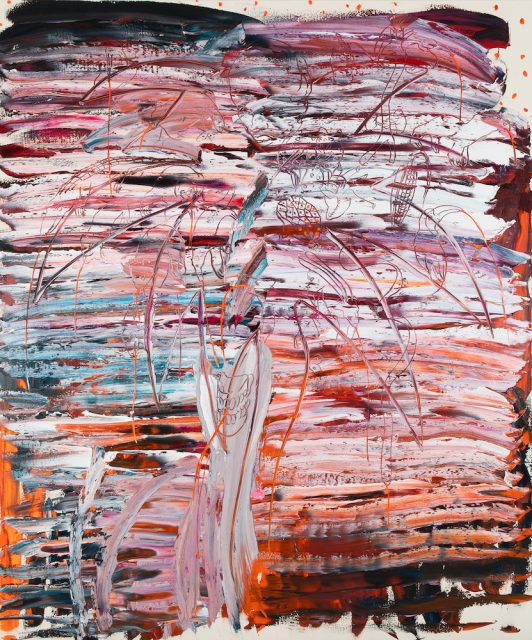
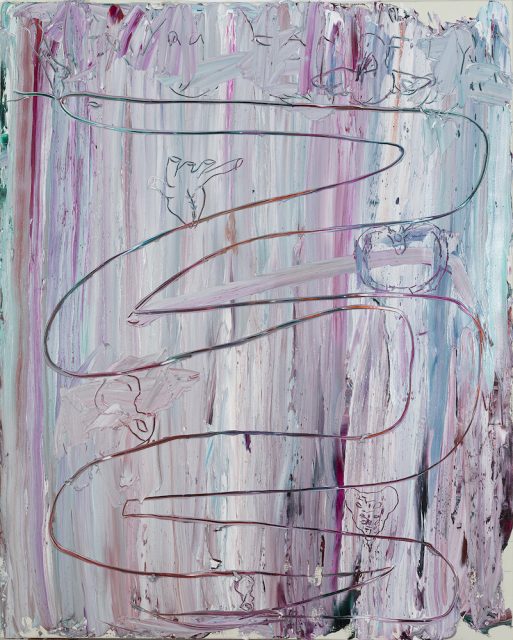
Kawauchi’s paintings often place human organs—hearts, lungs, and others—amid the animals. This, too, is not unrelated to what I have discussed. Animals and human organs occupy entirely different realms, yet organs, as Kawauchi herself notes, are invisible in daily life and their movements remain unknown to us. Human beings govern society and everyday life through reason, but our organs operate beyond the reach of that reason. When we eat, for instance, the digestive system begins working all at once; blood rushes to major organs, and cerebral activity is temporarily suppressed. In that moment, one becomes something other than oneself. And if our own bodies can so easily slip out of our control, what does that say about the reliability of the reason to which we cling? A reason unable to command the body is fundamentally akin to the human inability to grasp the speed of animals. Thus, even when organs appear alongside countless animals in her paintings, nothing is unnatural about it. What may be unnatural, rather, is the human assumption that all of these can be grasped and understood at the pace of reason. After all, the brain—the seat of thought—is itself an organ. Where, then, does reason reside? It is suspended, without an anchor. And before it can panic over its own placelessness—before the inertia that tries to drag the work back into the human norm reasserts itself—Kawauchi draws, using a body filled with organs, opening her images toward an outside.
Inevitably, humans also appear in her paintings in altered form. Hands become less like hands and more like the limbs of arthropods; clothing is stripped away; bodies soften into pliant shapes; heads lose all individuality. When a human figure appears at all, it resembles either a newborn straining to stifle its cry of fear at being thrust into the world, or an elderly person on the verge of death, drained of vitality. Their expressions seem bewildered, as though swept away by the wildly differing speeds surrounding them—some too fast, others too slow.
Organs may not dart across a scene like animals do, but they nonetheless inhabit a tempo wholly unlike that of conscious human beings. Their movements are far slower than the speed at which humans draw or make things—so slow, in fact, as to be nearly impossible to perceive, and thus equally beyond human cognition. The quickness of animals and the slowness of organs are both extremely difficult—indeed impossible—to grasp accurately within the normal bounds of human perception. The same can be said of the pace at which plants grow, flowers bloom, fruit ripens, or even of celestial movement—the sun and the moon tracing their courses through the sky.
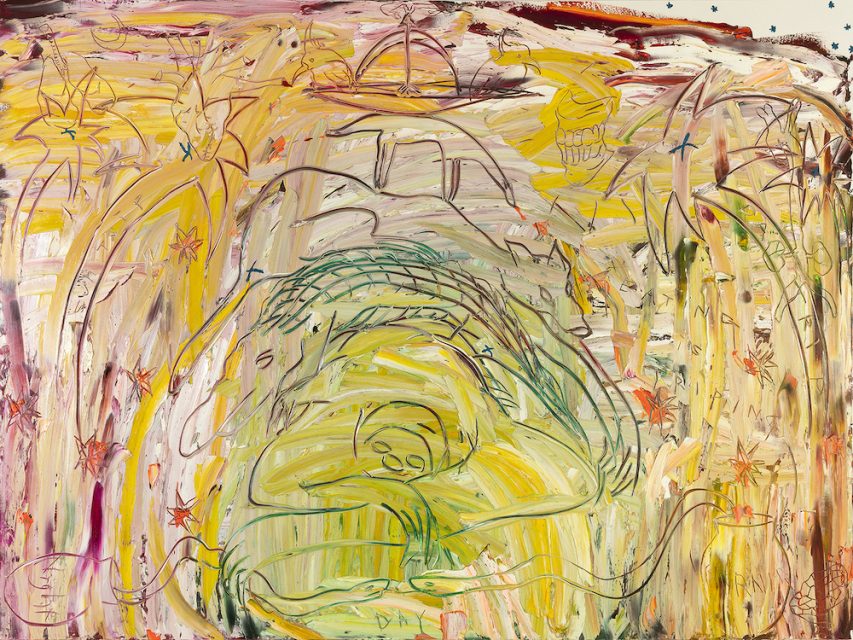
In Kawauchi’s paintings, organs such as the heart and lungs often appear intermingled with animals, scattered throughout the composition. This, too, is not unrelated to what I have touched upon so far. Animals and human organs exist in entirely different places, but organs— as Kawauchi himself notes—are normally invisible to us and their movements remain unknown. Human beings govern society and everyday life through reason, yet organs are entirely removed from this regime. As Kawauchi says, when we eat, the digestive system suddenly begins to work all at once, blood is directed toward the major organs, and the brain’s activity is temporarily subdued. In other words, we become something other than ourselves. How substantial, then, is this reason that belongs to a body that can become something other than itself? A reason unable to control the body is, in fact, of the same nature as the human limitation that is incapable of fully grasping the speed of animals. For this reason, even if organs are depicted alongside numerous animals, nothing is particularly unnatural about it. What may be unnatural is rather the human assumption that such things can be grasped and understood at the speed of reason. Or, more precisely, we should remember that the brain—the seat of thought—is itself an organ. So where, then, does reason actually reside? Is it not suspended in midair? Before worrying about this placelessness, this absence—before the inertia of reason, now emptied out, catches up and tries to pull the image back into the domain of human normalcy—Kawauchi uses the body filled with these organs to draw lines and attempt to bring the painting forth into an exterior realm.
As a result, human beings inevitably begin to appear in the paintings in different forms as well. Hands become less like hands and more like those of arthropods; clothing is stripped away; bodies turn soft and distorted; heads become anonymized. Even when a figure appears as “someone,” it resembles either a newborn child stifling a cry out of the terror of birth, or an elderly person on the brink of death, drained of vitality. Their expressions seem unsettled, as if bewildered by the surrounding speeds that are far too fast or far too slow, losing their sense of self.
Of course, organs do not move swiftly through space like animals, but they inhabit a tempo different from that of conscious human beings. This is certain. Organs move far more slowly than the pace at which humans draw or create objects. Their slowness is so gradual as to be nearly imperceptible—another domain that exceeds human cognition. The quickness of animals and the sluggishness of organs are both exceedingly difficult—indeed impossible—to grasp accurately within the range of perception in which humans ordinarily live. The same could be said of the growth of plants in Kawauchi’s paintings, the blooming of flowers, the ripening of fruit, or even, in a broader sense, the motion of celestial bodies—the sun and the moon.
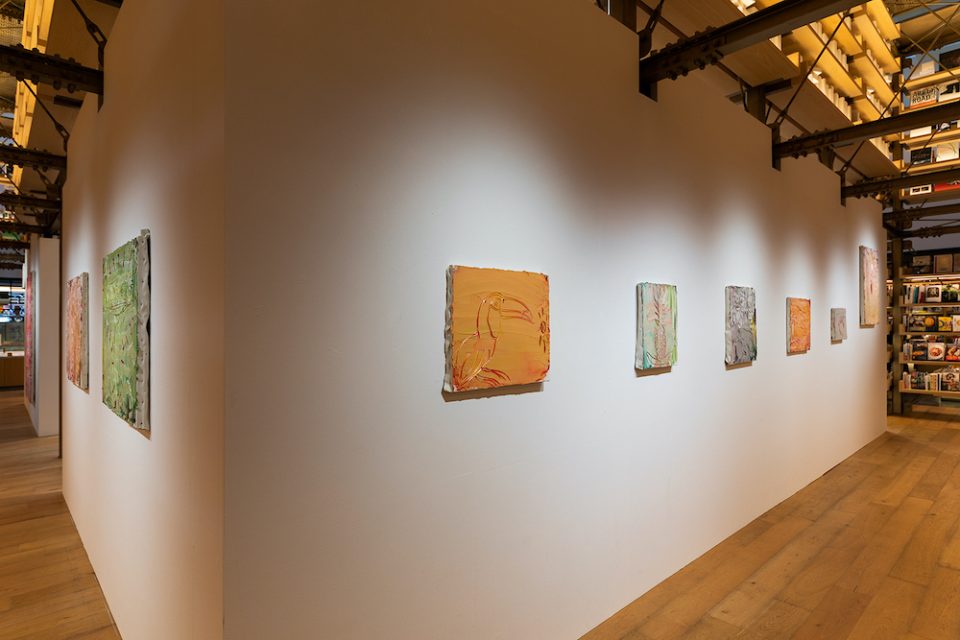
I felt that the mood—one might even say the emotional atmosphere—that filled the space during Kawauchi’s recent solo exhibition was close to this very force. To call it “beauty” may sound old-fashioned, but the term itself hardly matters. Whatever we call it, it is something that descends from elsewhere, not from within the viewer, and—mediated by the painting—pours down mercilessly upon us, compelling us to sense it whether we wish to or not. At least for me, it was not something to be analyzed or interpreted; indeed, such an attempt seemed impossible. What I felt in looking at Kawauchi’s paintings was a kind of pressure, as though the artist, striving to keep pace with the overlapping velocities of animals, organs, plants, and celestial bodies within the pictorial field, had deliberately pushed thought and reflection to the background and was instead driving the body to its limits. These images are painted not in the ordinary time presupposed by rational operations like analysis or interpretation, but within a too-fast or too-slow temporality where speeds collide on a bodily rather than a conceptual level. And so, in order to put this into words—as I am attempting to do here—it seemed necessary to let impressions settle while allowing subjective bodily responses and changes to unfold simultaneously, almost like taking dictation at high speed.
In Phaedrus, Plato ultimately states—further along from the passages mentioned earlier—that the realm of beauty imparted by Eros cannot be reached through writing. This would mean, paradoxically, that Plato himself violates the taboo by writing about something that cannot be written; yet in fact it is not Plato who speaks, but Socrates to whom he gives voice. The essential point remains: there are domains that can only be reached through dialogue, though in a way distinct from rhetoric, and these domains involve no relation between persuader and persuaded. In other words, a written text does not possess objective value in itself. Like the classics, it must be capable of being read across generations and of generating equitable dialogue with ever more diverse sets of values; otherwise, it remains merely temporary.
This is true of painting as well. Paintings worth seeing inevitably possess a quality that allows the viewer to enter into an inner, dialogical relationship with them. From this standpoint, a painting that is self-contained and controlled down to the last detail closes itself off, obstructing dialogue; in seeking too strongly to persuade the viewer, it ultimately reduces itself to a mere instrument of persuasion. Lysias’s speech in Phaedrus is impressive, but it is nevertheless only an explanation, nothing more. What it lacks is not a horizontal relation of persuasion but the intervention of Eros—the force that, through dialogue, draws the soul upward toward the heavens. Indeed, myths possess almost no persuasive power in the modern social sense, and if they have endured across centuries, that endurance itself is the work of Eros.
And this force—overflowing beyond the artist’s intentions—is unmistakably at work in Kawauchi’s paintings. Borrowing the cunning of the hunt to approach the animal’s abilities, it extends from the canvas toward the body of the viewer, initiating a dialogue; before one realizes it, like Kawauchi’s paintings themselves, it modifies the viewer’s body and begins to stir of its own accord, like an organ moving independently of the will. Surely this is the very source of that power.
*川内理香子個展「Colours in summer」は2022年7月2日から13日まで、銀座 蔦屋書店 GINZA ATRIUMで開催された。
筆者近況:コンセプト・アドバイザーをつとめた「楳図かずお大美術展」(2022年9月17日〜11月20日、あべのハルカス美術館[東京展(東京シティービュー)からの巡回])が開催中。監修した図録は大阪展開幕と同時に会場で発売、寄稿「幼年期の「始まり」——楳図かずおと回帰する「14歳」」を収録。美術出版社より『東北画は可能か?』発売中、寄稿「極東画は不可能か——「東北画は可能か?」の括弧はなぜ一重なのか」。カイカイキキより刊行の『THE ART OF JELLYFISH EYES めめめのくらげ』に村上隆とのツイッター交換記録が再録された。10月1日より朝日新聞読書面・書評委員。